

Identifying Core Inefficiencies in Modern Medical Operations
In the dynamic healthcare landscape of April 2026, medical practices face a constant balancing act. We strive to deliver exceptional patient care while navigating complex operational and financial demands. This dual challenge makes healthcare practice optimization not just beneficial, but absolutely essential for survival and growth.
Optimizing your practice means systematically refining every process. It ensures we operate efficiently, keep patients happy, and maintain financial stability. Without it, practices risk burnout, lost revenue, and compromised patient experiences.
In this comprehensive guide, we will explore how to achieve this crucial balance. We will delve into strategies that span the entire practice, from enhancing direct patient interactions to streamlining medical billing. Our goal is to equip you with the knowledge to transform your practice into a more efficient, patient-focused, and financially robust entity.
Before we can optimize, we must first understand the common pain points that plague modern medical practices. Many practices, having evolved organically, often find themselves operating with “accidental workflows” – systems that developed out of necessity rather than deliberate design. These often lead to significant inefficiencies that impact patient care, staff morale, and financial health.
One of the most pervasive issues is the sheer administrative burden. Studies indicate that administrative tasks can account for nearly 25% of total healthcare spending. This isn’t just a financial drain; it translates into a substantial time commitment for staff. For instance, office staff often spend an average of 34 hours per week on administrative duties. This heavy workload contributes directly to staff burnout, a critical concern in healthcare today. When employees are overwhelmed by paperwork and repetitive tasks, their job satisfaction plummets, leading to higher turnover rates and a less cohesive team environment.
Patient wait times are another glaring inefficiency. Prolonged waits for appointments, during check-in, or for prescription refills can severely diminish the patient experience. These delays are often symptoms of deeper workflow bottlenecks, such as inefficient scheduling systems, slow insurance verification processes, or inadequate patient intake procedures. For a practice focused on delivering high-quality, personalized care, like a specialized dental clinic offering San Francisco individualized post-braces care, ensuring a smooth patient journey from consultation to follow-up is paramount. Any friction in this process can lead to patient frustration and, ultimately, patient leakage, where individuals seek care elsewhere.
Documentation lag is another significant challenge. Physicians and clinical staff spend valuable time on charting and administrative tasks, often after hours, which detracts from patient interaction and personal well-being. Fragmented communication across different systems-EMR, email, phone calls-exacerbates these issues, leading to missed messages, duplicated efforts, and a lack of real-time information flow. These inefficiencies, while seemingly minor individually, accumulate like a leaky faucet, steadily draining resources, time, and morale from the practice. Recognizing and addressing these core inefficiencies is the first critical step toward meaningful practice optimization.
Strategic Healthcare Practice Optimization Through Technology
In the rapidly advancing healthcare landscape of 2026, technology is no longer an optional add-on but a fundamental pillar of practice optimization. Leveraging the right digital tools can dramatically enhance efficiency, improve patient outcomes, and bolster financial stability.
At the core of this technological transformation is robust EHR (Electronic Health Record) integration. An integrated EHR system centralizes patient information, reducing paperwork, minimizing errors, and ensuring that all care providers have access to a comprehensive patient history. However, the true power of EHR lies in its interoperability-the ability to seamlessly exchange data with other systems, such as labs, pharmacies, and billing platforms. This eliminates data silos and creates a unified view of patient care and practice operations.
Telemedicine has also cemented its place as an essential tool. Beyond increasing patient access, it optimizes practice operations by reducing no-shows, expanding geographical reach, and allowing for more flexible scheduling. Patient portals empower patients to take a more active role in their healthcare, offering features like online appointment booking, secure messaging with providers, access to medical records, and prescription refill requests. This not only improves patient satisfaction but also reduces the administrative burden on front-desk staff.
When considering technology investments, we often prioritize solutions with a high return on investment (ROI). Key areas include:
- Integrated EHR/Practice Management Systems: For comprehensive administrative and clinical management.
- Patient Engagement Platforms: Including patient portals, automated reminders, and online scheduling.
- Workflow Automation Tools: Such as e-faxing, automated eligibility verification, and digital intake forms.
- Data Analytics and Business Intelligence Tools: For performance monitoring and strategic decision-making.
- Telehealth Platforms: For virtual consultations and remote patient monitoring.
- Mobile Health (mHealth) Applications: For patient self-management and provider access on the go.

Furthermore, the shift towards cloud computing provides scalable, secure, and accessible infrastructure for healthcare data, reducing the need for costly on-site servers and IT maintenance. Alongside this, robust cybersecurity measures are non-negotiable to protect sensitive patient information and ensure compliance with regulations like HIPAA. By strategically adopting and integrating these technologies, practices can create a more streamlined, efficient, and patient-centric environment.
Leveraging AI and Emerging Technology for Healthcare Practice Optimization
The advent of Artificial Intelligence (AI) and other emerging technologies is profoundly transforming healthcare practice management in 2026 and beyond. These innovations are moving beyond mere efficiency gains, enabling smarter workflows and unprecedented insights.
One of the most impactful applications is AI scribes. These tools listen to patient-provider conversations and automatically generate clinical notes, significantly reducing the documentation burden. Physicians have reported over a 70% reduction in documentation time with AI scribes, saving nearly four hours per week on administrative tasks. This allows clinicians to focus more on patient interaction and less on post-visit charting.

Predictive analytics is another game-changer, particularly in managing patient flow. AI algorithms can analyze historical data to predict no-show rates, allowing practices to overbook strategically or proactively engage patients with reminders. This helps mitigate the average cost of $200 per no-show time slot. Beyond scheduling, machine learning is increasingly being used in diagnostics, assisting clinicians in identifying patterns and potential conditions more rapidly and accurately.
Voice technology is also enhancing operational efficiency. From AI-powered voice agents handling routine patient inquiries and scheduling calls 24/7 to ambient transcription systems that capture and summarize clinical encounters, these tools free up staff for more complex tasks. For a practice that prides itself on cutting-edge approaches and personalized patient experiences, such as Waltzman’s optimized healthcare practice, integrating these AI-driven solutions is key to maintaining a competitive edge and delivering superior care. The trend towards greater automation in 2026 highlights the need for practices to adopt these technologies to remain efficient and responsive.
Enhancing Patient Access and Scheduling Efficiency
Optimizing patient access and scheduling is crucial for both patient satisfaction and practice profitability. Inefficient scheduling leads to missed appointments, frustrated patients, and lost revenue.
Online booking systems are now a standard expectation, allowing patients to schedule appointments at their convenience, 24/7. This dramatically reduces phone call volume for front-desk staff and improves overall patient experience. Complementing this, automated reminders-via text, email, or even automated calls-are highly effective in reducing no-show rates, which can cost practices significant revenue.
Virtual consultations (telemedicine) also play a vital role in optimizing scheduling. By offering telehealth options, practices can often accommodate more patients, reduce travel time for patients, and free up physical exam rooms for in-person visits. This hybrid model provides flexibility and improves resource allocation.
The adoption of self-scheduling software empowers patients further, allowing them to manage their appointments, fill out forms in advance, and receive relevant information. Waitlist management systems can automatically fill cancelled slots, minimizing gaps in the schedule and maximizing provider utilization. By providing diverse, user-friendly channels for access and scheduling, practices can significantly improve patient engagement, reduce the financial impact of no-shows, and ensure a smoother, more accessible patient journey.
Operational Excellence: Staff Management and Workflow Design
Effective staff management and well-designed workflows are the backbone of an optimized healthcare practice. It’s not just about having enough staff, but about how the work gets done and how teams collaborate.
A fundamental step is establishing standardized procedures for all routine tasks, from patient intake to billing. This reduces variability, minimizes errors, and ensures consistency in service delivery. Coupled with this is task specialization, where specific roles are clearly defined, and staff are trained to excel in their designated areas. This fosters accountability and efficiency.
Workflow visibility is critical for managers to track progress, identify bottlenecks, and ensure tasks are completed on time. This can be achieved through digital dashboards and clear communication channels. In 2026, many practices are also leveraging remote support teams to handle administrative tasks such as appointment scheduling, insurance verification, and billing. This offloads internal staff, allowing them to focus on direct patient care and higher-value activities.
Flexible staffing solutions, including PRN (pro re nata, or as needed) options, are becoming increasingly vital. These solutions help practices adapt to fluctuating patient volumes and staff absences without overextending permanent staff or compromising patient care. This approach to resource allocation and capacity management ensures that the practice can maintain optimal nurse-to-patient ratios and service levels even during peak times. By embracing these principles, practices can cultivate a more resilient, efficient, and harmonious operational environment.
The Role of Staff Training and Delegation in Healthcare Practice Optimization
A highly skilled and well-managed team is indispensable for an optimized healthcare practice. Investing in staff training and effective delegation not only improves efficiency but also boosts morale and reduces burnout.
Continuing education is paramount, ensuring that staff are up-to-date with the latest medical practices, technological advancements, and regulatory changes, including HIPAA compliance. Regular training sessions on new software, patient communication techniques, and clinical protocols are essential.
Effective delegation involves clearly defining roles and responsibilities. Implementing structured communication methods like SBAR (Situation, Background, Assessment, Recommendation) handoffs ensures that critical patient information is accurately and efficiently transferred between team members. This is particularly important in team-based care models, where multiple professionals contribute to a patient’s treatment plan.
Practices can also implement role-based queues for tasks like prescription refills or lab result management, ensuring that the right person handles the right task efficiently. Empowering staff with medical directives (under appropriate supervision) allows them to perform certain tasks independently, freeing up physician time. Performance dashboards can help monitor individual and team productivity, providing constructive feedback and identifying areas for further training. Strategies like cross-training and mentorship programs enhance staff versatility and foster a supportive learning environment, ultimately contributing to better staff retention and a more capable team.
Clinical Workflow Optimization: Standardizing the Patient Journey

Clinical workflow optimization is about transforming ad-hoc processes into predictable, efficient, and high-quality care pathways. It’s about ensuring every step of the patient journey, from initial contact to follow-up, is streamlined.
The process begins with process mapping, where every step of a clinical workflow is documented to identify inefficiencies and bottlenecks. This often reveals areas like slow intake bottlenecks, disorganized lab result routing, or inefficient refill triage systems. For example, a common issue is lab results falling through the cracks or prescription requests stalling due to unclear protocols.
Standardizing these processes involves creating clear protocols for tasks like patient handoffs using SBAR (Situation, Background, Assessment, Recommendation) to ensure consistent, accurate communication. For lab results, this means defining categories (normal, abnormal, critical) with clear routing rules, service level agreements (SLAs), and automated notifications to ensure timely review and action. Similarly, a refill triage ladder can empower medical assistants to handle routine requests, escalating only complex cases to providers.
Technology plays a crucial role here. Real-time location systems (RTLS), for instance, can track equipment, staff, and even patients within a facility, optimizing patient flow and reducing search times. The goal is to reduce variability, improve patient safety, and enhance overall outcome management.
Here’s a simplified comparison of manual vs. automated clinical workflows:
Feature Manual Workflow Automated Workflow Appointment Phone calls, paper schedules, manual reminders Online booking, automated reminders, self-scheduling Patient Intake Paper forms, manual data entry, long wait times Digital forms, pre-registration, kiosk check-in Handoffs Verbal, handwritten notes, risk of information loss Standardized SBAR templates, integrated EHR messaging Prescription Phone/fax requests, manual verification, delays E-prescribing, automated refill requests, triage queues Lab Results Manual review, physical charts, delayed follow-up Electronic routing, automated notifications, SLAs Documentation Manual charting, dictation, post-visit burden AI scribes, voice-to-text, templates By systematically optimizing these clinical workflows, practices can deliver safer, faster, and more patient-centered care.
Financial Management and Revenue Cycle Improvement
Optimizing the financial health of a healthcare practice is as critical as delivering excellent patient care. A robust revenue cycle management (RCM) strategy is essential to ensure sustainable operations and growth.
One of the most significant areas for improvement lies in addressing claim denials. A staggering 86% of claim denials are potentially avoidable, representing a massive loss of potential revenue. These denials often stem from issues like incorrect coding, incomplete documentation, or expired authorizations. Implementing proactive measures, such as automated eligibility verification and thorough pre-authorization processes, can drastically reduce denial rates. For specialized support in navigating complex billing landscapes and minimizing denials, practices often turn to experts in Healthcare billing optimization.
Monitoring Days in A/R (Accounts Receivable) is a key performance indicator. High days in A/R signal delays in payment collection, impacting cash flow. Practices should aim to keep this metric under 40 days. Performance benchmarking against industry standards for metrics like claim denial rates, collection rates, and RVU (Relative Value Unit) productivity per physician FTE helps identify areas where the practice is underperforming.
Revenue leakage is another silent drain on practice finances. This can occur from various points, including unbilled services, undercoded claims, or patient interaction leakage, which accounts for up to 30% of potential revenue loss. Implementing automated charge capture systems ensures that all services rendered are accurately recorded and billed. Training staff on patient financial conversations-discussing payment options, insurance benefits, and outstanding balances upfront-can significantly improve patient collections and reduce bad debt. Finally, cost structure benchmarking allows practices to compare their operational expenses against peers, identifying opportunities for cost control and efficiency gains. By focusing on these financial optimization strategies, practices can unlock significant revenue, improve cash flow, and secure their long-term viability.
Implementing a Clinical Workflow Optimization Plan
Implementing a comprehensive clinical workflow optimization plan requires a structured approach to ensure success and minimize disruption. It’s not a one-time fix but an ongoing commitment to continuous improvement.
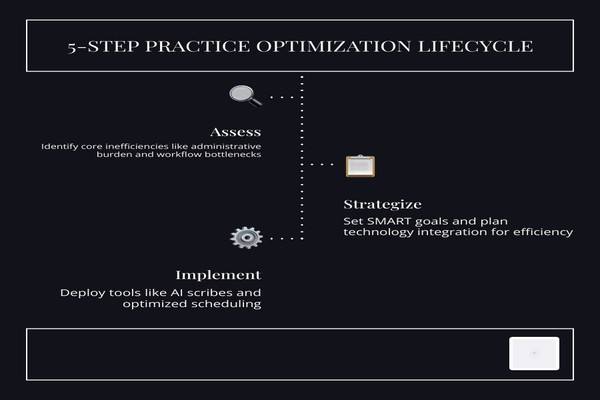
The first step is a thorough assessment of current workflows. This involves documenting every step of existing processes, interviewing staff members from various roles, and identifying pain points and bottlenecks. This initial phase helps to understand what’s working, what’s not, and where the biggest opportunities for improvement lie.
Based on the assessment, practices should set SMART goals (Specific, Measurable, Achievable, Relevant, Time-bound) for optimization. For example, “reduce patient check-in time by 20% within six months” or “decrease prescription refill turnaround time to 24 hours for routine requests.”
Developing solutions should be a collaborative effort, involving the staff who perform the tasks daily. Their insights are invaluable for creating practical and sustainable changes. Once solutions are designed, they should be implemented, often starting with pilot programs in a specific department or for a particular workflow to test effectiveness and gather feedback before a wider rollout.
Monitoring is crucial. Regularly track performance KPIs (Key Performance Indicators) related to the optimized workflows. This could include patient wait times, documentation completion rates, claim denial rates, or staff satisfaction. Data analytics dashboards provide real-time insights into these metrics, allowing for quick adjustments and continuous refinement.
However, practices must be aware of common pitfalls. These include resistance to change from staff, inadequate training, poor technology integration, or a lack of clear communication during the transition. Addressing these challenges through robust change management strategies, including clear communication, incentives, and ongoing support, is vital.
Consider the scalability of solutions, ensuring they can grow with the practice. Regular regulatory audits are also necessary to ensure that optimized workflows remain compliant with evolving healthcare regulations. Finally, always calculate the ROI (Return on Investment) for optimization efforts, demonstrating the tangible benefits in terms of cost savings, increased revenue, and improved patient outcomes.
Frequently Asked Questions about Healthcare Practice Optimization
What are the primary measurable benefits of practice optimization?
Successful practice optimization yields a multitude of measurable benefits. These include increased patient throughput, allowing practices to serve more patients efficiently. We often see reduced overhead costs due to streamlined administrative tasks and improved resource utilization. Patient satisfaction typically improves, reflected in higher Net Promoter Scores (NPS). For staff, optimization leads to enhanced staff satisfaction and reduced burnout, as repetitive tasks are automated and workflows are clarified. Financially, practices benefit from higher clean claim rates and faster revenue cycles. For instance, AI scribes alone can offer up to 4 hours of weekly time savings per physician, directly contributing to productivity gains.
How can practices ensure HIPAA compliance while optimizing operations?
Ensuring HIPAA compliance during optimization is non-negotiable. Practices should designate a compliance officer responsible for overseeing regulatory adherence. Implementing integrated secure messaging within EHR systems helps maintain patient privacy during communication. Regular risk assessments are crucial to identify vulnerabilities in new workflows or technologies. Adopting frameworks like HITRUST provides a comprehensive approach to managing information security and compliance. Automated audit trails within digital systems help track access to patient data, and continuous staff training on digital privacy protocols is essential to prevent breaches and ensure proper handling of protected health information (PHI).
Where should a practice start the optimization process?
The best starting point for optimization is a thorough internal review. Begin with a KPI review to identify current performance levels and areas needing the most attention. Conduct patient experience surveys to pinpoint specific pain points from the patient’s perspective. Next, engage staff in workflow mapping for key processes (e.g., scheduling, intake, billing) to identify inefficiencies. Prioritize identifying high-risk clinical processes where errors could impact patient safety or financial stability. It’s also beneficial to benchmark productivity against 75th percentile standards for your specialty, such as RVUs per physician FTE, to understand where your practice stands. Finally, perform a technology gap analysis to see where digital tools can offer the most significant improvements.
Conclusion
As we navigate the complexities of the healthcare landscape in April 2026, healthcare practice optimization stands out as the strategic imperative for sustainable growth and resilience. It is a holistic endeavor that extends beyond mere cost-cutting, focusing instead on cultivating a culture of professional excellence and continuous improvement across all facets of the practice.
By embracing data-driven decisions, leveraging advanced technologies like AI, and prioritizing patient-centered outcomes, practices can transform inefficiencies into opportunities. We’ve explored how addressing administrative burdens, streamlining clinical workflows, and optimizing financial management are not isolated tasks but interconnected components of a successful strategy. The integration of technology, from EHRs and telemedicine to AI scribes and predictive analytics, is no longer a luxury but a necessity for enhancing efficiency and improving the quality of care.
The goal is to create an operationally sound, financially robust, and patient-centric practice. This commitment to operational resilience and long-term value creation ensures that practices can adapt to evolving industry demands, thrive in a competitive environment, and continue to deliver exceptional care for years to come.

Comments are closed.