

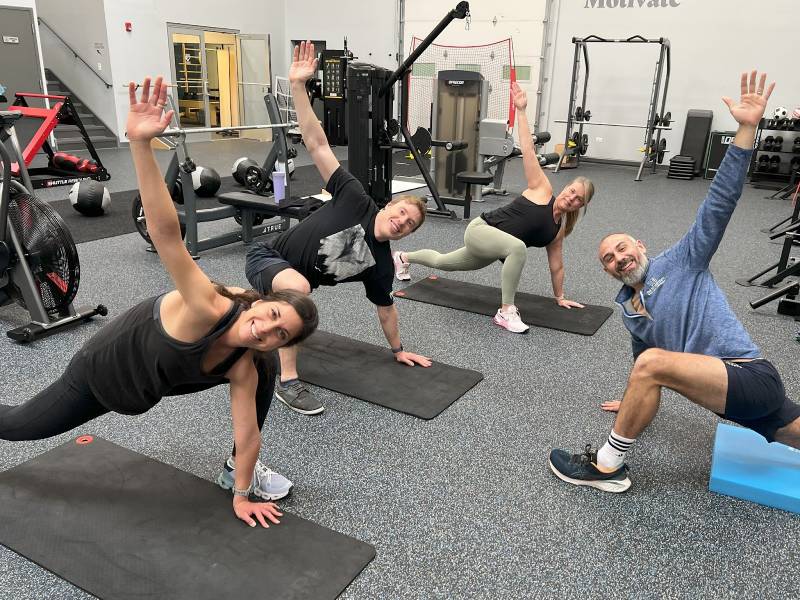
Anxiety creates an adversarial relationship with the body, where physical sensations are interpreted as threats rather than natural responses. A person’s environment determines whether they feel able to engage consistently with exercise or whether it feels overwhelming. For anxiety sufferers, an In Home Personal Trainer removes the environmental triggers that make gym-based exercise difficult, providing the space for physical exercise in a space free of social evaluation, predictability, and sensory overload that public training environments introduce.
Environmental safety
- Familiar surroundings – Training within the home removes the novelty anxiety that unfamiliar environments generate for sufferers whose nervous systems treat new spaces as sources of potential threat. The client’s own home carries an existing association with safety that no gym or public training space replicates, regardless of how welcoming that external environment attempts to appear during each visit.
- No social evaluation – Gym environments expose exercisers to the perceived judgment of other members throughout every session, a pressure disproportionately amplified within the anxious nervous system, regardless of whether any actual evaluation is occurring at any given moment.
- Predictable structure – Anxiety reduces significantly within predictable environments, making the consistent structure of home training sessions a therapeutic element in its own right beyond the physiological effects of exercise itself.
Exercise as nervous system regulation
Regular physical activity reduces resting cortisol levels, increases serotonin production, and improves the brain’s capacity to regulate the amygdala responses, generating disproportionate threat perception across everyday situations encountered throughout the week. A trainer working with an anxiety sufferer designs sessions around nervous system regulation as a primary objective rather than treating it as a secondary benefit of fitness improvement across the programme. That means session intensity is managed carefully to avoid triggering the physiological anxiety symptoms, racing heart, breathlessness, dizziness, that overlap with panic responses in ways causing anxious clients to associate exercise itself with the sensations they most fear experiencing during any given session.
Trainer-client relationship
The consistent one-to-one relationship a home trainer builds with an anxiety-suffering client carries value extending beyond the exercise component of each session. Being reliably present, predictably structured, and consistently focused on the client’s specific needs within their own space creates a relational experience that challenges the hypervigilant threat-detection patterns anxiety sufferers apply to interpersonal interactions throughout their daily lives outside the training window. That relationship develops trust in a context where trust is precisely the resource that anxiety most depletes across time. A client who develops confidence in their trainer’s consistency, competence, and genuine professional interest in their progress transfers elements of that growing confidence into adjacent areas of their life beyond the training sessions themselves, making the home training relationship a meaningful contribution to overall anxiety management rather than simply a vehicle for physical fitness improvement across the programme duration.
Trainer’s role extends beyond exercise prescription into the deliberate construction of sessions that challenge the anxious nervous system at a pace that builds confidence rather than overwhelming it at any point during the engagement period. Clients whose anxiety makes public exercise feel impossible often discover through home training that movement was never the barrier; the environment surrounding it was, a distinction that changes everything about what becomes accessible once the right setting is established from the outset.

Comments are closed.